Inherited Frustration: How One Family Found Peace After Crisis

Following my post yesterday, I received an extraordinary message from a mom who had a story to tell about her family’s journey from authoritarianism to foster parenting to Peaceful Parenting. With her permission, I am so grateful to be able to share her story here.

I have enjoyed reading these posts on positive parenting and today’s post really resonates with me and within my family dynamics. My husband and I are both in our later 40s, and when we met, I was divorced and had a two-year-old daughter. By this time, I was co-parenting quite nicely with my ex-husband. (There was certainly an adjustment period to that though). 😬 And I had also been doing Foster Care with “High Risk” teens for 6 years at the time. (I hate that term. Always have. But the reasoning for that is because most…not all…had come into foster care due to some kind of neglect/abuse parental death or other forms of trauma). In order for my husband to move in and join our Family (anyone living in the household had to do the same) a background check, several interviews with workers along with parenting classes needed to be taken through our state.

He was in the military, had never been married or lived with anyone and had no Children of his own. He knew from the beginning (once we were serious) that my ex-husband was a very active father. The two of them had many conversations about our daughter. Although he was about to become a very important part in her life, they wanted to work together in helping raise her and they both made a conscience effort to do so. (The same happened with our daughter’s new step momma. So, she ended up with 4 parents that love her).

In Foster Parenting classes they give many conflict resolution techniques, teach about the importance of respecting and fostering the needs of each individual child, working alongside their parents (if they were trying to reintegrate…most teens were in independent living, so reintegration wasn’t common) in partnership parenting in order to help that process, and help the family and children succeed when they went back to their family or eventually moved out on their own. We were taught what normal age appropriate behavior looked like, and were encouraged to have honest and open dialogue with the children about their thoughts, feelings, emotions and needs. There was absolutely NO corporal punishment of any kind allowed or involved by state law. (As it should be). Since I was a foster parent before we had a child of our own, that’s also how we raised our child. “Peaceful Parenting” probably before the term was even coined. Lol

Anyway, our families live in different states, and I knew the first time I met his family that my daughter and I were valued and loved. This started even before we met them actually! They included us and my foster children in every aspect they could! He and I had both been raised in the Christian Faith, and many other aspects of our childhood were the same. Going to church every Sunday (or anytime there was a function) and our families socialized with other families in our Churches. It was just part of our daily lives growing up. The one difference there was that his parents were fundamentalist (meaning “old school” or law oriented) and mine were not and were/are very grace (new testament) oriented. That’s rather important in this long story. Lol.

In the 70s it was a very common “idea” that children were to be seen and not heard. Spanking (or BEYOND spanking) was never questioned. It was usually the “go-to” form of discipline. Spank first…ask questions or talk about it later (if at all). And for those of us who were involved in church (remember…that’s who all the families socialized with so it’s really all we knew) “spare the rod, spoil the child” was preached. Without any further advice or explanation that the term was actually about the shepherd and his sheep. The shepherd’s staff (rod) was used to GUIDE the sheep in the right direction in order to keep them safe…not to physically punish the sheep for “misbehaving”.

In my family, I recall being spanked as a child a few times. My mom was the “disciplinarian” of the family, but neither of them were “yellers” and she usually just talked to us if there were issues. The few times I did get spanked, she still talked and validated our feelings…but AFTER the spanking. Lol. I never have felt any anger or resentment towards her, and in truth I probably would have been the same way with my children if it hadn’t been for the parenting classes I took. It’s just how I thought it was “done”.

In my husband’s family, (he also went to private schools his entire life) getting spanked with a paddle both at home and even through high school IN the school with family members present sometimes to watch…is just how it was “done”. Not only was it acceptable…it was encouraged. The last paddling my husband remembers was at 17. (It’s called a paddling because it’s a literal paddle board). In both cases our parents absolutely believed they were doing the right thing both socially, and in the eyes of “God”. Who was and continues to be a major part in all of our lives. (My husband and I are now both Grace oriented). 😮

And in both of our cases, our parents absolutely love their children with everything in them. And that love is returned.

My husband was medically discharged shortly after we got together, and we soon found out that he has PTSD. He’s always been one to “react” to stress or certain situations in a negative way. It’s usually by yelling, “demanding” that one “complies without question” (that was partially because of the military) and generally the “just do as I say” without questioning why that certain behavior or situation was even happening. “I’m the boss…you will listen” type thing.

I’ve always been really good at setting boundaries and bringing issues up as they were happening, and I stick to those boundaries while trying to figure out the reasoning behind “it” whatever it is. I was the one that helped our older children with any major issues. If there was a high stress situation happening, I took care of it, while he would exit the room and entered again when things calmed down. I was the “defense” person trying to stop escalation before it happened. In those times of stress, many times things would escalate very quickly and extremely irrationally. Sometimes on the verge of emotional/verbal abuse towards me. For those of you who are familiar with PTSD, this is a fairly common thing. That said, PTSD is a reason…not an excuse (There’s a difference). Nobody is responsible for trauma that’s been inflicted onto them or mental illness. NOBODY. (I suffer with depression and anxiety). But it is our “responsibility” to recognize, take responsibility for and to learn to change patterns of behavior that are harmful to others.

After our second child came unexpectedly in our 40s, (we had been out of FC for several years at this point. Our last children went to college, and had started families of their own) and things went really well until our son started becoming an independent little human. When he started getting into things, walking, talking and all that comes with growing up (Our son is high needs. He has ADHD, sensory issues and is in the evaluation process for autism. Life with a high needs child can be challenging on top of typical everyday growing up that all children go through) so those “high stress” incidents started happening more and more out of frustration.

One day in a high stress situation, he snapped. There was screaming and no rational thinking process in sight. And this happened in front of our son. It was one thing for me…an adult who can speak for myself and has extensive knowledge in how to de-escalate/manage certain behaviors…but it’s entirely different when a child is subjected to that kind of behavior…if its intentional or not. So, I made the decision that day and told him that if this behavior continued, I would divorce him and would do WHATEVER it took to protect our son. Protect him from thinking this was “normal”. Protect him from thinking that this is how we treat those that we love etc. Abuse is abuse…if its intentional or not.

My husband knew that wasn’t a threat. It wasn’t just some kind of manipulation to get him to stop. He knew I was absolutely serious because of my boundary setting and following through. Thankfully he took me seriously and chose to do whatever it took to LEARN different behavior.

So, for the past several years I’ve witnessed him researching developmental stages and age appropriate behavior in children. I’ve seen him take charge of his mental health and seek out different strategies on how to unpack issues in his own life, and learn how to cope in productive ways. I had bought an extensive online course on Positive Parenting, and he took the time to go through all of it. (Sometimes more than once). I’ve witnessed our family becoming a cohesive unit that tackles challenges together. There’s no more “running defense” on my end. I’ve witnessed the relationship between son and father go from frustration and overwhelming…to a relationship of understanding and peace. Naturally there are still challenges and high stress situations…there always will be. That’s life. But life looks and IS so much better for all of us now.

So, I completely understood what was written here in this post. Going against what we knew as “normal” and learning a different way to handle issues within the family unit…and hopefully our children won’t have to “reprogram” themselves later in life like we’ve done. Has it been easy? Absolutely 100% no. Was it worth it? Absolutely 100% yes!! ♡ So thank you for sharing this with us so we don’t feel so alone in our parenting journey.
Peaceful Parenting is Not the Easy Way

We all started out somewhere and we all have a story to tell. In my case, my own upbringing was rather “because I said so” authoritarian. There was some freedom around intellectual pursuits, but children were to obey immediately and without question. I recall “FRONT AND CENTER!” being a common command and “That’s a mistake” serving as an almost reflexive reaction to anything I did that went against the grain. The hard truth is that, when I was little, my parents generally followed an authoritarian Christian evangelical philosophy with a fundamentalist flavor and all the perspectives on child rearing that came with that. I love my parents and I had so many blessings during my childhood. I still disagree with that mindset about kids.

It’s probably no surprise that I bought into it myself for many years, including years I was employed in child care. Up until about six years ago, I believed that children were born sinful and wicked, and that they needed Christian molding in order to become holy. I’ve since been Chrismated into the Orthodox Church, which takes a much gentler and a more holistic approach to the way in which we regard children and ourselves too. For me, Orthodoxy showed me that the end goal was so much more important than whatever crisis was happening in the here and now. Wisdom and patience had to be my tools.

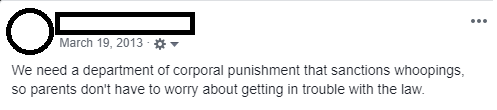
Now, I’m going to share something potentially shocking here. I want y’all to understand clearly where I was six years ago. I present to you pre-Peaceful Mom:

Yikes on bikes, y’all. Yikes on bikes and trikes with giant yellow wheels that people ride on the ocean. Just YIKES.

When I look at the date on that facebook timestamp, I realize that it really hasn’t been very long since I was lobbying for the government to dole out passes for people to hit their kids! I remember what it felt like to say that too, so I’ve dedicated this post to share with you a framework build-out that I hope will support the efforts of those of you who are coming to Peaceful Parenting with old baggage like I did.

But How Do You Make Them Behave??

I heard about Peaceful Parenting and thought it sounded too good to be true. So, I joined several groups and I’m telling y’all, my mind was screaming “BUT HOW DO YOU MAKE THEM BEHAVE??” every time I read a gushy story about parents connecting with their kids and finding new solutions and blah blah blah. (Those blahs are all the amazing things that come along with Peaceful Parenting. I just want y’all to understand my frame of mind back then.) I utterly could not wrap my mind around the idea that children could be allowed autonomy and still be respectful and responsible. It just did not compute. I was stuck in the authoritarian frame of mind which was telling me that children have to be placed under an adult’s control or they can’t function in society. Peaceful Parenting requires a massive paradigm shift for some of us. I even found myself going through the stages of grief. That’s how overthrown I felt.

I find that irritation/anger is a pretty common response when I talk with people about Peaceful Parenting. They try to point out all the ways that Peaceful Parenting can’t work even when I provide evidence to the contrary. I get it. I was there just a few short years ago. For me, it was infuriating to hear people talking so earnestly about something I missed out on as a kid, and it simply didn’t make sense that these people would give their kids so much lenience. I was certain they were being overly permissive or even neglectful. No way could Peaceful Parenting result in anything other than bratty behavior. (Sidebar: I no longer believe brats even exist, but that’s a topic for an upcoming post.)

Gracious! Why was I so invested in Peaceful Parents being wrong? I imagine a therapist would point to the child inside of me screaming, “It’s not fair!” I really could have used a lot more understanding when I was a little. So, I would ask you, knowing what you know about Peaceful Parenting, and putting aside any conviction that it couldn’t possibly work, would you have appreciated this approach informing your own upbringing?

I Can’t Do This

If you’ve decided that Peaceful Parenting is worth the effort, but you fear you can’t manage it, you’re not alone. There are facebook groups with tens of thousands of people struggling with all of this too. I find myself constantly edging toward the authoritarian side of the fence, and I have to bring myself back to center all the time. I have to ask myself, “Why are you saying no right now?” and “What is behind this child’s behavior?” instead of delivering the old standard “Because I said so” or leaping to punishment as soon as my child does something mildly inconvenient. When I first started, I jumped in feet first. I went full on attachment with all the nursing and babywearing and bedsharing I could get. It was amazing! Infanthood is just magical.

Then, babies turn into toddlers who are very certain about what it is they want to do. Toddlers that keep you running for your books to read up on how you should address their many new behaviors. But, there’s a secret in all this. You grow into Peaceful Parenting just like your kids do. It’s great to start out when they’re infants. It’s also great to start out when they’re teens. It doesn’t matter when you start. You and your kids will find a rhythm. You can do this! You’re going to mess up and feel like you’re failing, but you’re not. The fact that you worry about failing means you care. Every interaction you have with your kids is another opportunity to be gentler and kinder.

So What Do You Actually DO then?

I’ve been right here more times than I can count. Once I had decided that children were worthy of respect from me as an adult, I couldn’t fathom what to do with that. I turned to books and read everything I could. I need structure. I need formulas. I need something I could retrieve from the catalog in my brain that would tell me “do this, then this, then that” to help me through difficult times. That’s how my mind works. I tend to be very analytical and I struggle with anything that feels chaotic. Over the years, my approach has become a lot more natural, because I’ve practiced it… well… every single day! So, here’s what I do.

  1. Create My Own Peacefulness: I take a deep breath and remember that the Peaceful part of Peaceful Parenting is me. I love memes and I follow as many people on social media as I can who post memes about Peaceful Parenting. Often times, one of those memes comes to mind at just the right time and reminds me of my purpose.
  2. Assess My Child’s Needs: I assess if my child’s needs have been met. Discomfort, hunger, thirst, sleepiness, under- or over-stimulation, etc. Is there something basic that’s irking my child? If so, I try to address that in the process of working through the challenging behavior. Remember, children do well when they can.
  3. Foster My Child’s Emotional Equilibrium: If my child is feeling too upset to hear anything I have to say, my first duty in the interest of respect is to help them by connecting. You’ll often hear me say, “I’m here. You’re safe. It’s ok to be upset.” or something to that effect as I offer comfort. I have cuddly kids, so they usually want a hug, but even when they don’t, I stay nearby and let them know they aren’t alone.
  4. Empathize with My Child: Everything in Peaceful Parenting really hinges on this one. If we can acknowledge that our children’s emotions are always valid and worthwhile, we can remember to address them gently every time. My simplest go to phrase is “You’re (emotion) because (reason.)” It isn’t so easy for kids to voice their emotions or put together what’s causing their distress, so speaking it out from your perspective can give them the words they need. For instance, “You’re angry because sister took your toy without asking.” That validation is crucial for their self-confidence but also to develop their sense of morality. No, it’s not ok for people to take your things without asking, no matter how old you are.
  5. Set Gentle, Reasonable Limits: If you need to set a limit, now’s the time. My standard limit language is “I can’t let you (behavior) because (reason that logically follows).” For example, “I can’t let you hit your sister because you will hurt her.” Using “I” statements helps you, as the parent, express your own perspective, and prevents you from moralizing your child. With this prompt, you never again have to run the risk of telling a child they’re bad.

How Will My Child Learn Right from Wrong?

Here’s another question I had. It didn’t make sense to me that children could learn morals without strictness and punishment. It took me a long time to figure out how that part works. Maybe I can help you too. 

I want you to think about a big outdoor trampoline with a safety net around it. Like this:

This is how I think of limits. They’re that safety net. I simply show my kids where the boundary is and help protect them from crossing it. Now, the limits I provide are much more effective than a safety net because, while I stand in the way of trouble, I also explain and guide my children’s understanding of the way this world works. I offer love, connection, and understanding that a safety net can’t. But, I like the analogy of a trampoline safety net, because it’s just there as a limit. It’s non-judgmental and it doesn’t intentionally harm the kids having fun within its mesh walls. It can be removed as the kids become more able to navigate trampoline play without hurting themselves, much like a limit in Peaceful Parenting. I’m sure there are some holes in my analogy and that’s ok, but I want y’all to visualize how limits can protect and teach without harm.

Given everything I’ve said thus far, I’m sure you can see that Peaceful Parenting can be rather dialogue-heavy and time consuming. It’s become such a priority for me that I’ve adjusted my entire life around it. I leave more time to get places, so that I don’t feel compelled to yell at my kids to get out to the car. (Full Disclosure: I am a yeller and it’s constant work not to do it.) I create ways in which to say yes instead of no, because I want my kids to see opportunities more often than they see barriers. I encourage my kids to bare their hearts to me no matter where we are. As a result, I have all but stopped caring about what anyone thinks when we’re out in public. It doesn’t matter where we are or what’s happening, I will kneel down and help my child through a difficult moment. I will be the shield and safety net.

As a Peaceful Parent, I’ve found my efforts to be immense and the rewards to be incalculable. My children are affectionate, kind, and respectful while unabashedly being exactly who they are through and through. I’m here to support you in having similarly wonderful experiences in your Peaceful Parenting journey. If you have reactions or questions about the transition to Peaceful Parenting, please post them in the comments below. Let’s talk.

Kindness vs Niceness

A friend asked me to talk about the difference between kindness and niceness, as both concepts are used in an effort to point children in the direction of appropriate social skills. This topic had been sitting in my bank of ideas when the perfect moment arrived. Ellen Degeneres drew heat this past week when it came to light that she enjoys a close friendship with former President George W. Bush, a man responsible for the deaths of tens of thousands of people both domestically and internationally and one who chipped away at the rights of swaths of U.S. citizens. Given her claim that she is kind to all, this crisis presents a unique opportunity to take a deeper look at kindness versus niceness. Kindness has many benefits and it’s certainly a noble trait to pursue. So, what’s the difference between kindness and niceness? Is Ellen’s situation truly an example of kindness?

Dictionaries don’t offer much of a distinction, but clearly we do differentiate in common parlance. Niceness is demonstrably synonymous with politeness, whereas kindness exists in a deeper, more committed space. I propose my own definitions for the sake of clarity. 

Niceness is the quality of being polite in pursuit of respectability and maintaining the status quo. Niceness avoids conflicts and behaves in socially acceptable ways in order to reveal our best intentions. Niceness derives from humanity’s basic drive to be accepted within a social group. Clothes can be nice. Days can be nice. Dogs can be nice. People can be nice. Niceness is the overarching compliment paid to those who make us feel good. However, it can be misleading at best and fraudulent at worst. Niceness uses adherence to social standards as a means to improve a person’s social standing and, therefore, it cannot be relied upon to advance all people equally. Not when our culture suffers from disparities in equity across all aspects of identity.

Niceness brings us school flyers like this one where children are told they are responsible for the bullying that happens to them, that only they can stop it by appearing strong, and that they can hope the bully moves on to hurt another child.

Kindness, on the other hand, is active compassion and connection built out of intentional service to others. It accounts for its impacts. Kindness can be maintaining close ties to problematic people out of genuine love, and resting on the strength of that relationship to discuss difficult topics. Kindness can also be setting boundaries that limit our exposure to people who mean us harm, and using our energies instead to provide radical advocacy for oppressed people. Kindness exists in many places across the spectrum of justice. Kindness looks like states taking steps to assess children for childhood trauma (and presumably moving to include identity-based injuries, such as race-based traumatic stress, in the ACEs assessment). It looks like entire school systems addressing the problem of bullying by teaching children about boundaries, consent, and cooperation. It looks like zero tolerance policies that elevate – and at the very least believe – children who speak out against bullying while at the same time placing bullies into programs that help them work through their inner turmoil and learn better coping skills. 

In Ellen’s case, kindness could have been saying that she had found common ground with Mr. Bush, acknowledging his problematic positions, and using her proximity to him to advocate for the rights of disenfranchised people. It could have been using her white and economic privilege as a unsettling force. It could have been openly recognizing that Mr. Bush holds views that fundamentally conflict with her own. Views that inflict intentional harm on people she loves. Or, she could have joined the ranks of those who rightfully decry the massive injustices faced by enormous segments of our population.

I understand the conflict as I admittedly feel compelled to stay connected to people in order to be what may be the only contentious voice in their lives. I believe I’m responsible for using my privilege and my access to challenge my peers to abandon destruction in favor of restoration. I hope to use my voice to give them pause in the voting booth as I contextualize the effects of their choices, correct the misinformation they receive, and quell their anger that rages against the unknown.

I believe there’s kindness in connecting with the humanity in people who do harm and urging them to stop. And, I believe there is kindness in stepping back and standing up for people whose needs are not being met. Both are valid forms of activism. But, I do not see Ellen doing either as she digs in her heels regarding her relationship with Mr. Bush. I hope that she does carry the activism she wields in other areas of her life into this friendship. I hope that it’s already happening and she just hasn’t found a way to express it. And, I hope we, as Peaceful Parents, strive to understand the difference between niceness and kindness, and to acknowledge that Peaceful Parenting is going to be divisive in a culture that actively advances the status quo. Niceness is permissive. Kindness is brave.

The Peaceful Parenting Philosophy, Oppression, and Grace

It’s launch day for the blog, and I have so many thoughts spinning in my mind. Peaceful Dad and I had a conversation tonight over supper about my post on privilege. It was difficult. He reminded me that, as a white person, some people may be inclined to regard my words over those of a Black person saying exactly the same thing. He said that, while there’s not much I can do about how other people perceive me, I can and should be explicitly clear about my impetus for making controversial statements about something as sensitive as discipline in a public-facing blog; that to some I will look an awful lot like another white person colonizing a way of life. Ouch. And, he’s right. The vast majority of Peaceful Parenting “experts” are white. The vast majority of people in Peaceful Parenting discussion groups are white. I asked him if I should write at all and he said he couldn’t answer a binary question like that. He said that there’s value in what I’m doing, but that I should accept rightful criticism from people who don’t experience the world the way I do. 

I will absolutely grant that Peaceful Parenting is a special interest of mine. The philosophy and all its manifestations show up in my dreams, in my conversations, in my writing, and in every encounter I have with my children. It’s an extension of my world view… of my faith. I probably speak with too much authority about it and offer advice where I’m neither wanted nor needed. I will be working toward waiting for an invitation to offer my perspective rather than jumping right into a conversation. I will try to ask if my presence is welcome.

I want my readers to know that I do not consider myself an expert by any stretch of the imagination. I’ve read a lot and learned a lot from others, but I don’t know what it’s like to parent a teenager or a child with Oppositional Defiant Disorder [ODD is a questionable and stigmatizing diagnosis that will will no longer be referencing] or one who has been bullied. In my heart of hearts, what I strive for is to bring people together to brainstorm solutions. I don’t have all the answers, but together, we can accomplish much.

I also need to work on extending grace. I need to affirm that people parent differently than I do, because they’re doing their best with the circumstances they face just as I am. I firmly believe that Peaceful Parenting as a philosophy is a head above other approaches to discipline and that adopting an inclusive, respectful viewpoint about children will naturally lead to kinder interactions and more resilient kids. I see so many memes about Peaceful Parents giving ourselves grace when we don’t meet our own expectations. I have yet to see one about Peaceful Parents being non-judgmental toward parents who use traditional methods.

I’m committed to presenting alternatives and asking my readers to consider why they do what they do. I celebrate anyone who chooses to be kind whether or not their entire parenting philosophy aligns with mine. I hope we can find some commonalities and better understand each other.

I appreciate all of you.

Peaceful Parenting and Privilege

I believe Peaceful Parenting is right for every child and every parent. There is no child on this planet who would not benefit from a respectful, gentle approach. However, Peaceful Parenting is broad and solutions are not one-size-fits-all. More important, privilege plays a major role in it.

I am a white ciswoman. I am married. My husband is employed and I am able to stay home to parent. I am able to feed and clothe my children without any worry. And, while our family’s income is not currently sufficient to support our needs without some public assistance, my husband’s retirement account is growing and I will almost certainly be the recipient of generational wealth eventually, so we have assets that many families do not. We also have extended family members who provide much of what we cannot.

To my readers who aren’t sure if they’re in the right place, I want you to know that I realize my situation is no comparison, for instance, to that of a woman of color raising children on her own, working multiple jobs, and fearing for her children’s health and safety. So, while I will always promote Peaceful Parenting and try to offer suggestions to parents who pose problems to me, I am no sanctimommy and I recognize that what works for me won’t work for everyone. I also recognize that I am representative of whiteness and a symbol of privilege. There will be parents who come to this blog and have trouble relating to what I post. It is not my place to lecture a disadvantaged person on how to be a better parent when I am shielded from the trials they face. My intention is to offer support and brainstorm ideas; not to heap more pressure onto your shoulders. As I go forward, I intend to compile resources from people who can speak to your experience in a way I cannot. I do sincerely hope that we can find common ground and that you will take something positive away from my words, whatever that might look like for you.

To readers who are more like me, particularly white readers, I want you to understand my belief is that, as a white person, I am responsible for speaking directly to other white people regarding issues of justice, particularly issues that directly impact Black people, as half of my family is Black. With that said, I defer to the expert words of Dr. Joy Degruy who explains some of the historic-cultural differences between white parents and Black parents and, proximally, why Peaceful Parenting is especially complicated for Black people. My hope is that this video will open your eyes to your own privilege and help you understand how your experience is not the same as that of people of color. I intend to bring more of this content to the blog to encourage my fellow white readers to be a disruptive force where you can to the benefit of oppressed people.

What Peaceful Parenting Is and Is Not

I tend to use the terms “peaceful” and “gentle” interchangeably and I season my perspective with other words like “respectful” and “responsive.” I think it’s important at the outset to explain where I’m coming from, which will provide insight into why I do what I do.

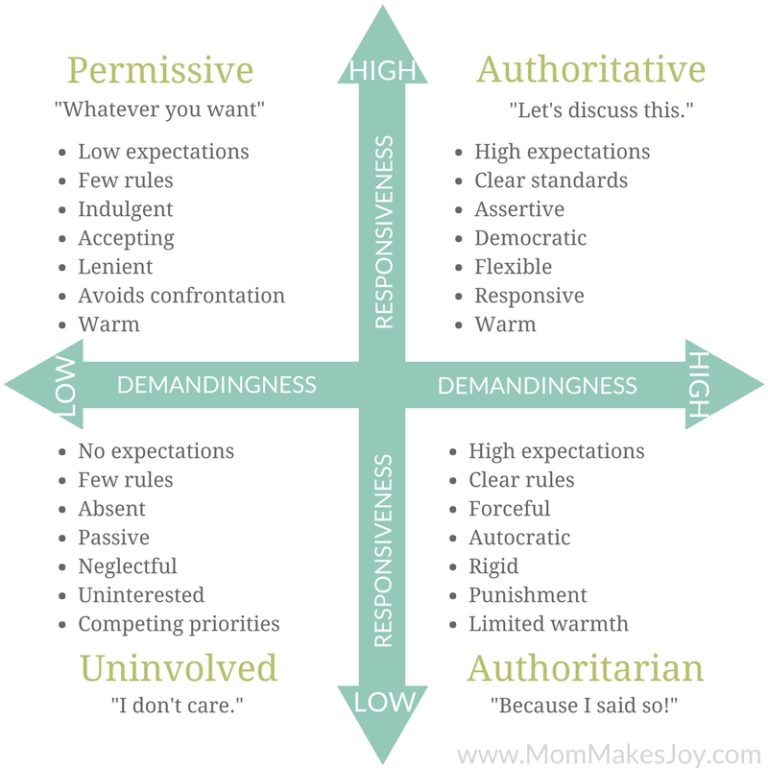
Peaceful Parenting falls under the Authoritative parenting style, which is an evidence-based method of producing cooperative, empathetic, respectful children. 

Peaceful Parenting differs from traditional, Authoritarian methods along clear lines. It begins with connection instead of compliance, and it favors intrinsic motivation and self-regulation over external means of control. From my perspective, for a parenting approach to be genuinely peaceful, it must meet these criteria:

  1. Children and adults must occupy positions of equal importance. Children need protection and guidance which is provided by adults. The balance of responsibility is clearly unequal with adults retaining the bulk. But, children are no less important than adults.
  2. Children cannot be sacrificed for the convenience of adults. I know all too well how difficult parenting is and how easy it is to exert control over kids to make our lives run more smoothly. However, stripping children of power to make our lives easier is disrespectful and harmful.
  3. Adults must reject punishment and rewards. It is enough to enforce limits. Adding arbitrary consequences or perks does nothing to help children develop self-regulation or intrinsic motivation. For a thorough explanation of why punishments and rewards don’t work like you might expect, check out this Raised Good post.
  4. Adults must model the behavior they want to see in children whether or not the children reflect it back. Children do well when they can. It’s not a matter of will but of ability. Many of us have a warped sense of children’s capabilities. For instance, a few years back, a national survey revealed that a majority of parents believe that children could resist the temptation to do what they know they shouldn’t before the age of three. This is a myth.
  5. Adults must connect with children first. Dr. Bruce Perry, a psychiatrist who specializes in trauma-informed care, developed what he calls the three Rs: regulate, relate, and reason. This approach works well for all children and it is simple to remember.
  6. Adults must accept emotions without judgment and address behavior with compassion. Emotions are ok. Crying is ok. And, we need to tell children that their emotions are good… that they themselves are good. Destructive behaviors are not ok, however, and should be addressed gently.

And, an important final note. Peaceful Parenting is not permissive nor is it neglectful. Peaceful Parents believe behavior is communication and that we should listen carefully. Allowing children to dysregulate and potentially harm themselves or others is not peaceful. Reasonable boundaries are a must!